

Dojo Etiquette
Respect for Oneself and Others
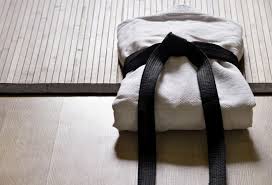
Dojo Etiquette, or Dojo-Kun, is the manner in which each student and teacher expresses discipline and respect when training in the Dojo. We practice etiquette at all times to build character, and integrate as a group to better focus on our training. Etiquette is displayed to the training hall, your teacher, and to each other.
Below are several key forms of etiquette when training:
Personal Preparation
- Please arrive clean in body and mind. Wash hands and feet as needed before class. Refrain from consuming alcohol or any other substances prior to training.
- All jewelry must be removed before class, including rings, necklaces, earrings, and piercings. This is both a matter of tradition and safety.
- Smartwatches and fitness trackers are not permitted, even for tracking exercise. Phones must be silenced and kept off the mat.
Entering and Exiting the Dojo
- Training is performed without shoes, though socks or tabi socks may be worn. Please leave your shoes at the door upon entering the building.
- Before stepping onto the mat, always bow toward the shomen (front of the room) and enter with your left foot first. After stepping onto the mat, bow again toward any senior students (senpai).
- When leaving the mat, reverse the procedure: bow, then step off backwards, right foot first.
Mat and Sword Etiquette
- When carrying a sword outside your obi, hold it in your right hand with tsuba locked with the thumb. Holding it in the left hand is an aggressive posture and should be avoided.
- If you must leave the mat during class (e.g. for restroom or water), remove your sword and place it at the side or back of the room.
- When placing a sword down, do so at the back or side of the room, never in the middle of the mat. The tip (kissaki) and edge (ha) should face away from the shomen.
- Never step over a sword lying on the ground.
- Students are expected to help clean the dojo after each class.
During Class
- Avoid unnecessary talking during class.
- Class time should be focused on training. If you have a question, quietly ask the instructor or a senior student off to the side—do not interrupt the flow of instruction.
- Try not to be late for class. If you are late, kneel by the side of the mat and wait until the instructor invites you to join. Thank the instructor with a bow before stepping onto the mat. If you missed the warm-ups, stretch briefly at the back before joining a group—ask permission before joining.
- When the instructor or senior student is speaking, it is proper to kneel in seiza, so only the instructor is standing. This shows respect and allows everyone to see clearly.
- Responses to instructors should be brief and respectful—“Hai” (yes) is appropriate.
- Always report any injury to the instructor, no matter how minor.
- When lining up for Seiretsu, form up in rank order from right to left, with the highest rank on the right. If you’re unsure, ask the people next to you what rank they are. If this is your first class, line up at the far left.
Respect and Culture
- Always respect your own equipment and that of others.
- Never ask another student to handle or examine their sword.
- In traditional sword arts, a practitioner’s sword is considered an extension of their spirit and training. Asking to touch or inspect someone else’s sword is considered disrespectful unless they offer it. If curious, express interest in the style or craftsmanship and let them offer it freely if they wish.
- A senpai is a senior student based on their length of time training in the dojo—not necessarily their rank. Treat all senpai with the appropriate respect, even if your own rank is higher.
Disciplinary Policy
Tenshinkai NJ maintains a respectful and safe training environment for all students. Any behavior that violates dojo etiquette, safety protocols, or this Code of Conduct may result in disciplinary action. Disciplinary measures will be proportional to the severity and frequency of the offense and may include:
- Verbal Warning – For minor or first-time violations, the instructor will address the issue privately and explain the necessary correction.
- Written Warning – For repeated or more serious violations, a written warning may be issued and kept on file.
- Suspension from Class – Temporary suspension from one or more classes may be enforced for behavior that poses a safety risk, violates rules, or shows disrespect toward instructors or fellow students.
- Expulsion – In cases of serious misconduct, repeated violations, or any action that endangers others, the student may be permanently removed from the dojo.
All disciplinary actions are documented and reviewed by both dojo co-leads. Students are welcome to request clarification or respond to any formal warning or action.
Note: Tuition or membership fees will not be refunded in the event of suspension or expulsion resulting from violations of dojo rules or conduct policies.